
Why Are We Still Ashamed of Our Culinary Heritage?
Šumadija has the products, the tradition and the culture of hospitality, but it still lacks a clear gastronomic direction capable of transforming its local cuisine into a serious tourism product. Šumadija does not have a problem with its culinary heritage. It has a problem with the way it relates to that heritage.
This is perhaps the simplest way to describe the position in which one of Serbia’s richest gastronomic regions finds itself today. We have the products, the traditions, the climate and geography, the wineries, orchards, livestock farming, rakija, cheeses, meat, vegetables, preserves, old recipes and, perhaps most importantly, a culture of hospitality that has been an integral part of life here for centuries. What we still lack is a clearly defined gastronomic identity that we know how to recognise, develop, present and, ultimately, position seriously on the market.
And that is precisely where the problem begins.
Over the past few decades, we have invested heavily in the idea that a restaurant has to be “international” in order to appear contemporary. Hotel and restaurant menus are filled with dishes belonging to Italian, French, Mediterranean, Asian or American cuisine, while local gastronomy is often reduced to a handful of predictable dishes, usually presented without sufficient thought, without contemporary interpretation and without any real attempt to build a story around them.
There is nothing wrong with international cuisine. Quite the opposite: any serious chef should understand global techniques, ingredients and trends, and any serious hotel should be capable of catering to the diverse tastes of its guests. The problem begins when the international ceases to complement what is ours and starts replacing it.
When travelling through Italy, France, Spain, Portugal, Greece or Austria, it is almost impossible not to notice the extent to which local gastronomy is integrated into the overall tourism identity. Even in high-end hotels, where international service standards are expected, local products, regional recipes and distinctive flavours occupy a central place. Modernity is not demonstrated by abandoning tradition, but by developing it. Here, we often do the opposite.
There still seems to be an unspoken belief that local food somehow belongs to taverns, rural households or traditional restaurants, while a serious hotel is expected to offer what can already be found almost anywhere else. As a result, it is often easier to find burrata, risotto, salmon, Caesar salad or a wok dish than a thoughtfully conceived dish built around Šumadija cheese, plums, kajmak, roasted peppers, honey, local meat, mushrooms, wine or rakija.
This is not a matter of taste. It is a matter of identity.
A guest coming to Šumadija does not expect us to prove that we can cook like Italians or the French. The guest wants to discover what we have, how we understand it and how successfully we have translated our own tradition into the language of contemporary gastronomy. That is precisely where we still lack confidence.
Šumadija’s cuisine has strong foundations, but it has not yet been sufficiently researched, defined or interpreted. We still do not have a clear enough understanding of which products should carry the region’s gastronomic identity, which dishes deserve contemporary reinterpretation or how local cuisine should be presented to a guest who expects a high level of service, aesthetics and precision.
That, of course, does not mean turning tradition into theatre.
Authenticity is not measured by the number of wooden boards, earthenware dishes or folkloric elements in an interior. Traditional cuisine is not stage scenery. It is a system of products, flavours and habits formed over generations, and the task of contemporary gastronomy is not to freeze them in time, but to understand them well enough to allow them to evolve.
That is where the future of Šumadija’s gastronomy should begin.
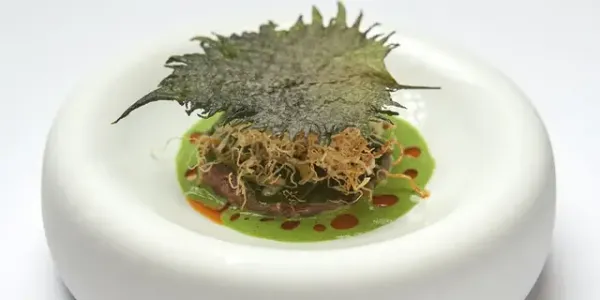
Not by trying to resemble somebody else’s cuisine, but by learning how to elevate its own products. The plum, for example, should not be confined to rakija and jam. It can become part of a serious tasting menu, used in sauces, desserts, fermentation and accompaniments, or serve as an element connecting several courses within a broader gastronomic narrative.
The same applies to kajmak, regional cheeses, roasted peppers, proja, honey, walnuts, mushrooms, lamb, veal, locally grown vegetables and wines.
But this requires knowledge.
It is not enough to say that something is local. A local product is not automatically a quality product, just as a traditional dish is not good merely because it has existed for a long time. Professional gastronomy requires consistency, standards, quality control, reliable suppliers, precise preparation and people who understand why a particular product or recipe deserves a place on the menu.
In that sense, local gastronomy cannot develop independently of its producers.
Šumadija has a large number of small food producers, wineries, distilleries, family farms and artisans whose products have the potential to become part of a serious hotel and restaurant offer. The problem is that these systems are still insufficiently connected.
Producers often do not know what the hospitality industry needs. Restaurants do not always know what the local market can supply consistently. Tourism organisations sometimes promote gastronomy more through individual events than through a long-term strategy.
That approach does not create a destination.
A destination begins to emerge only when the hotel, the restaurant, the winery, the producer, the tourism organisation and the local community begin to speak the same language. At that point, the guest no longer receives merely a meal, but an entire system in which every element confirms where they are.
That is what successful gastronomic destinations do particularly well. They do not leave it to the guest to work out what is local. They explain it, demonstrate it and offer it throughout the entire stay.
In Šumadija, that process should begin as early as breakfast.
There is no reason why breakfast in Kragujevac, Topola, Aranđelovac or Vrnjačka Banja should look almost identical to breakfast in any other European hotel. An international standard can and should exist, but alongside it there must also be a recognisable local character.
A guest should know where they have woken up before they even leave the hotel.
The same applies to the wine list. If a restaurant is located in a region with a serious winemaking tradition and an increasingly accomplished contemporary wine industry, local wines cannot be merely decorative additions to the list. They need to be carefully selected, professionally presented and paired with dishes that reflect the character of the region.
The same is true of rakija, which in Serbia still too often remains somewhere between tradition and improvisation instead of being treated as the serious gastronomic product it can be.
Yet no identity can be built without people. This is probably the most difficult part of the challenge.
For years we have talked about shortages of chefs, waiters and other hospitality professionals, but much less is said about how crucial their knowledge is to the development of tourism.
A good chef needs more than cooking techniques. A chef must understand the product, seasonality, pricing, organisation of work and the identity of the cuisine they are leading.
A good waiter cannot simply carry an order between the guest and the kitchen. They need to understand the dish, the wine, the preparation and the story of the restaurant in which they work.
That is where contemporary hospitality differs from simple service.
Guests recognise very quickly whether a restaurant genuinely understands what it is offering or is merely following a procedure. They notice the difference between staff who can explain a menu and staff who simply repeat it; between a kitchen with a clear concept and one that has created a menu according to the principle of “something for everyone”; and between a hotel that belongs to its destination and one that could, without any meaningful difference, be located anywhere.
That is the question Šumadija must now ask itself: do we want to be a destination that simply offers accommodation and food, or a destination with a gastronomic character of its own?
The difference is enormous.
In the first case, we compete on price, capacity and location. In the second, we create a reason to visit — and gastronomy can become one of the strongest reasons of all.
Around the world, travellers have long been choosing destinations according to restaurants, wineries, local markets, food festivals and distinctive regional products. Gastronomic tourism is no longer a niche. It is a serious part of the tourism economy and one of the few sectors in which a small destination can be just as attractive as a major one, provided that it has something authentic to offer and knows how to present it.
Šumadija has a significant advantage in this respect.
Its products have not yet been completely industrialised. Small farms still exist, local production survives and there are products with genuine provenance. There are people whose knowledge has not yet been transformed into a standardised brand, and it is precisely for that reason that it retains the authenticity increasingly valued on international markets.
But the time available to preserve such products and knowledge is not unlimited.
If we fail to integrate them into a serious system, some of that knowledge will disappear together with the generations that still preserve it.
The future of Šumadija’s gastronomy is therefore not a romantic question about tradition. It is a question of development. It is about whether we can transform the resources we already possess into new value.
That means cooperation with producers, the development of local menus, staff education, better interpretation of wines and rakija, the creation of gastronomic routes, more serious engagement by tourism organisations and, above all, a change in the way hotels and restaurants think.
We need to stop treating “local” as something suitable only for a tourism brochure.
Local must become commercially relevant.
It has to be delicious, aesthetically convincing, technically precise, financially sustainable and good enough to be offered to a guest without any sense of inferiority towards international cuisine.
Only then can we speak of a genuine gastronomic identity.
Šumadija does not have to choose between tradition and modernity. That is a false dilemma.
The world’s most successful gastronomic destinations demonstrated long ago that the most compelling concepts are created precisely by bringing those two together. The problem arises only when there is not enough knowledge to connect them properly. We do not need less international cuisine. We need greater confidence in our own.
We should learn from the world how to build standards, service, presentation and management — but not what we should become.
That is something we have to define for ourselves.
When, one day, contemporary Šumadija cuisine can be discussed as a clearly recognisable concept, we will know that serious work has been done.
That will not mean that every restaurant must serve the same dishes. It will mean that there is a shared awareness of the products, provenance and flavours of this region.
A hotel will then be able to be modern and unmistakably Šumadijan at the same time. A restaurant will be able to employ global techniques without losing its own character. A chef will be free to be creative without feeling the need to escape from local ingredients.
And when the guest leaves, they will know that they have been here, and nowhere else.
In the end, that is what matters most.
Tourism is not built solely on how many people visit a place, but also on what they say about it when they return home.
If Šumadija wants to become a serious tourism destination in the future, it must stop treating gastronomy and hospitality as supporting elements and place them where they belong — at the very heart of its tourism identity.
We already have something worth offering. What we still need to learn is how to turn it into something by which we will be recognised.
Autor
What's Next?
Stari Hrast Winery – Wine with a Sense of Place in Šumadija
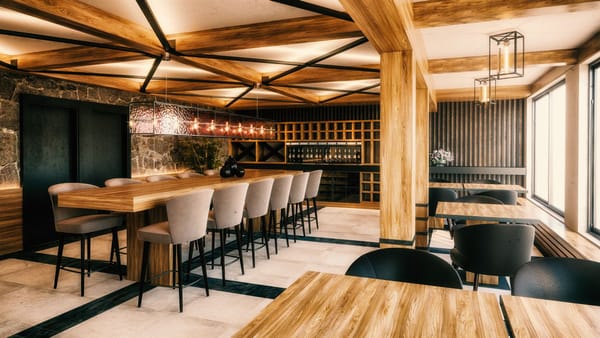
Just fifteen kilometres from Kragujevac, on a plateau above the village of Žirovnica, lies one of those places that help explain why Šumadija has increasingly come to be recognised as one of Serbia’s most promising wine regions. Stari Hrast Winery is neither a large industrial producer nor does it aspire to become one. Its strength lies precisely in the opposite approach: a family estate, its own vineyards and orchards, clearly defined provenance and a close connection between the wine and the
Stara Srbija Tavern – More Than a Century of Kragujevac’s Kafana Tradition
In the very heart of Kragujevac, on Karađorđeva Street, stands a place that is far more than simply a restaurant. Stara Srbija belongs to that increasingly rare tradition of Serbian kafanas – places where history is not preserved only in old photographs and stories on the walls, but is still felt in conversations around the table, in the aroma of traditional food and in an atmosphere that recalls a time when the kafana was one of the most important institutions of urban life. The roots of Stara
In the Footsteps of Karađorđe – A Journey Through Serbian History, Heritage and Identity
Set out through the heart of Šumadija on a journey connecting some of the most important chapters in Serbian history – from the First Serbian Uprising to the rise of modern Serbia under the Karađorđević dynasty. The thematic route “In the Footsteps of Karađorđe” connects Viševac, Orašac, Topola and Aranđelovac, creating a journey through the places where the foundations of modern Serbian statehood were laid. From Karađorđe’s birthplace in Viševac, through revolutionary Orašac, where the uprisin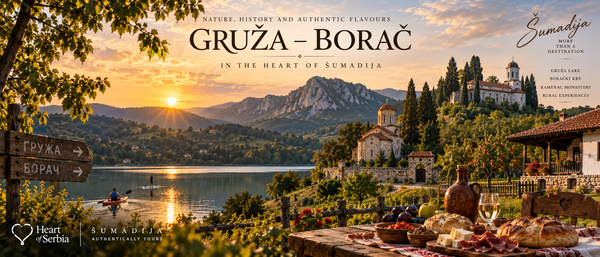
Nature, History and Authentic Flavours in the Heart of Šumadija
The thematic “Gruža–Borač” Route takes visitors through one of the most beautiful and authentic landscapes of Šumadija, bringing together natural attractions, cultural and historical heritage, outdoor activities and traditional gastronomy into a unique travel experience. Within a relatively small area, the scenery shifts from the peaceful shores of Gruža Lake and the impressive volcanic cliffs of Borački Krš to medieval heritage sites, rural households and places that still preserve the spirit o