
Kragujevac – Serbia’s Hidden Capital
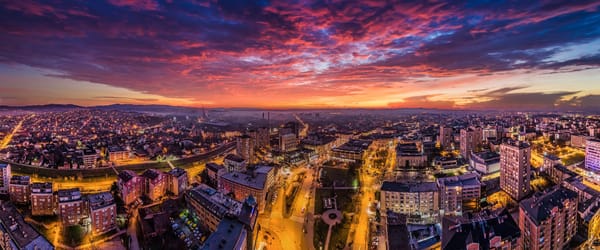
Šumadija lies at the very heart of Serbia, and Kragujevac is the heart of Šumadija. It is no surprise, then, that many say this city, located almost at the geographical centre of the country, captures the essence of the Serbian spirit better than anywhere else.
Set on the banks of the Lepenica River, Kragujevac rests in a valley surrounded by the beautiful landscapes of Šumadija — the rolling slopes of Mount Rudnik, Crni Vrh and the Gledić Mountains.
The City
Kragujevac, whose name is believed to derive from the kraguj, a species of bird of prey, is known as a city of many Serbian “firsts”.
It became the first capital of modern Serbia when Prince Miloš Obrenović chose it as the political centre of the newly restored Serbian state in 1818. Just two years later, Serbia’s first court was established here, followed by the country’s first grammar school in 1833. The tradition of pioneering achievements continued throughout the 19th century, and in 1884 Kragujevac became home to one of Serbia’s earliest electric power plants.
Today, visitors can briefly step back into this formative period of Serbian history by taking a relaxing walk along the Lepenica River and exploring the Miloš’s Wreath cultural and historical complex, which includes the Old Court Church, built in 1818, and the historic Assembly Building dating from 1856.
After exploring the landmarks associated with the birth of modern Serbian statehood in the very centre of the city, you can unwind in one of the many nearby cafés, traditional taverns and restaurants.
As the cultural centre of Šumadija, Kragujevac also hosts numerous cultural and sporting events. Among the most important are the celebrations marking City Day, accompanied by a wide variety of entertainment programmes, and the Great School Lesson — a solemn annual commemoration dedicated to the victims, including schoolchildren, who were executed during the Second World War.
The “Kragujevac October” Memorial Park is a memorial complex dedicated to the innocent victims of the Second World War.
“Kragujevac October” Memorial Park
The Kragujevac October Memorial Park is a vast memorial complex created in remembrance of the innocent victims executed during the Second World War.
Walking through the park, visitors encounter numerous monuments, the most recognisable of which is the Monument to the Executed Pupils and Teachers. Its split white concrete form evokes the Roman numeral V, gradually transforming into the shape of a delicate bird with broken wings — a powerful symbol of young lives cut short just as they were preparing to take flight.
October is a particularly meaningful time to visit, as a number of commemorative events are held throughout the month in memory of the tragedy.
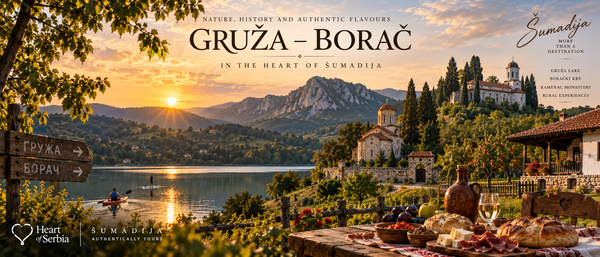
Lake Gruža
One glance at Lake Gruža is enough to understand why it is sometimes affectionately referred to as the “Serbian Sea”.
Surrounded by unspoilt landscapes, the lake offers sweeping views of calm water reflecting the blue sky above. It is home to numerous species of fish, while during the summer months the surrounding area attracts large numbers of migratory birds, making it an appealing destination for nature lovers.
Nature, however, is not the only attraction here. Close to Lake Gruža stands the medieval Borač Fortress, perched dramatically on top of a rock formation of volcanic origin. The setting gives the ruins a distinctive atmosphere of mystery and timelessness.
As Serbia’s former capital, Kragujevac is a city with an exceptionally rich history. Today, it is filled with buildings and institutions that played an important role in the development and modernisation of the country. It is up to you to discover them, one by one.
Attractions
National Museum of Kragujevac
When Prince Miloš received his first painting in the early 19th century and began assembling a personal art collection, he could hardly have imagined that he was laying the foundations of museum activity in Kragujevac.
Today, that tradition is represented by the National Museum of Kragujevac, officially established in the mid-20th century.
Its collections include paintings and sculptures, primarily by Serbian artists, spanning the period from the 17th century to the present day. One of the museum’s distinctive features is that it is not confined to a single building. Instead, it encompasses several historically important sites, including the Amidža Residence, the Residence of Prince Mihailo and the House of Archpriest Mateja Barjaktarević.
Through these collections and historic buildings, visitors interested in archaeology, ethnography, history and art can discover more about the development of Kragujevac and the wider Šumadija region.
Many artefacts in the museum’s collections are of exceptional archaeological importance, providing insight into the Vinča and other Neolithic cultures that once flourished in this part of Serbia. Its ethnographic collection, meanwhile, offers a fascinating introduction to the customs, traditions and everyday life of Šumadija.
Miloš’s Wreath
The Miloš’s Wreath cultural and historical complex encompasses a number of buildings dating from the early 19th century, when Kragujevac served as the capital of Serbia.
At the time, the city developed in an elliptical pattern around the Lepenica River.
Although not all of the original structures have survived, a leisurely walk through the area still offers visitors a glimpse into the earliest years of modern Serbian statehood.
Among its most important landmarks is Amidža’s Residence, the only surviving building from the former court complex of Prince Miloš. Nearby stand the impressive building of Serbia’s first grammar school and the country’s first modern theatre, the Knjaževsko-srpski Teatar, in front of which stands a monument to its founder, Joakim Vujić.
Visitors can also see one of Europe’s early covered market halls, which has retained its original purpose to this day.
The Old Court Church, with its distinctive yellow façade and surrounding park, is another highlight and provides a pleasant place to stop and rest.
Prince’s Arsenal
The opening of the Kragujevac Cannon Foundry in 1853 marked the beginning of Serbia’s industrial transformation.
The first major arms factory of its kind in the Balkans was equipped with some of the most advanced machinery of its time for casting artillery.
As production expanded, the foundry became the nucleus of the unique military-industrial complex known as the Prince’s Arsenal.
Today, its museum collection includes trophy weapons from the First and Second World Wars, as well as rare examples dating from the late 19th century, offering visitors an insight into the industrial and technological achievements of the period.
Kragujevac Aquarium
The Kragujevac Aquarium was the first public aquarium in Serbia.
Located within the Faculty of Science at the University of Kragujevac, it is home to a diverse collection of fish, reptiles, amphibians and other fascinating species representing aquatic ecosystems from different parts of the world.
Nikola Koka Janković Legacy
The Nikola Koka Janković Legacy is a distinctive architectural building designed by Zoran Gagić and dedicated to one of Kragujevac’s most important sculptors.
The collection contains 1,744 works of art, together with original objects from the artist’s studio, organised into three separate collections.
Its permanent exhibition, Living Art, presents more than 75 exhibits, including sculptures, drawings and authentic items from Janković’s studio, offering visitors an intimate insight into his creative world.
Old Foundry Museum
The Old Foundry Museum is housed in the authentic foundry building dating from 1882, within the industrial complex whose origins go back to the factory established in Kragujevac in 1853.
The building was designed in the spirit of the industrial architecture of the developed Western European countries of the period. Its construction combines wood, concrete and iron, while the brick façade, tall chimneys and multi-level roofs give it a distinctive industrial character.
The museum was established in 1968 and covers approximately 1,200 square metres.
Its collection contains around 5,500 exhibits documenting the technical and technological development of the Military Factory, as well as the broader industrial history of Kragujevac.
Museum of Bicycles and Pop Culture
The 20 Cola Museum of Bicycles and Pop Culture features a collection of more than 1,000 exhibits.
Visitors can see bicycles manufactured from the 1920s to the present day, children’s toys from around the world, comic books, video games and various technological devices produced during the second half of the 20th century.
The exhibition is divided into several thematic sections. In addition to bicycles and toys, visitors can browse classic comic books and once-popular Yugoslav magazines such as Politikin Zabavnik, Galaksija and Dečje novine.
Gaming enthusiasts can rediscover video games dating from 1977 onwards, including classic arcade cabinets where titles such as Pac-Man and Space Invaders can be played much as they were decades ago.
Music lovers can explore the Music Corner, a nostalgic journey back to the 1980s, where music is played from vinyl records and cassette tapes using original record players, cassette decks and radios.
Šumadija is also famous for a traditional drink known as “Šumadija Tea” — despite its name, it is not tea at all, but a warming drink made from mild plum brandy, water and caramelised sugar.
Food
There is another Kragujevac that cannot necessarily be seen at first glance — but it can be experienced through its aromas and flavours.
Rakija, wine and traditional home-style cooking are not passing trends here. They are part of everyday life and centuries-old tradition.
In this world, time seems to move differently: more slowly, perhaps, but also more completely.
Vineyards and orchards now grow on landscapes once covered by the forests that gave Šumadija its name, producing fruit used to make wine and the region’s famous plum brandy, šljivovica.
Together with traditional roasted meats, hearty slow-cooked dishes, homemade pogača bread, rustic loaves and proja cornbread, these drinks form an essential part of the culinary identity of Šumadija.
Kragujevac brings together the flavours and produce of the entire region.
Among its best-known dishes are specialties based on sauerkraut, including smoked pork knuckle cooked with sauerkraut, svadbarski kupus — the famous Serbian “wedding cabbage” — and podvarak, a slow-baked dish of sauerkraut traditionally served with meat.
Lamb also occupies an important place in local cuisine, with specialties such as roast lamb and lamb kapama, a rich traditional dish slowly cooked until tender.
Šumadija is also famous for the warming drink known as Šumadija Tea, prepared from mild plum brandy, water and caramelised sugar.
It is traditionally enjoyed during the colder months, although there is really no wrong time to try it when visiting Kragujevac.
Kragujevac is not a city of contrasts, but a city of layers.
It does not try to impress, because it knows it does not have to. Its strength lies not in spectacle, but in continuity — in the fact that throughout its history it has been a capital, an industrial centre and a place of immense tragedy, yet has remained grounded, resilient and authentic.
For the traveller, this means one thing: Kragujevac is not simply a city to be “sightseen”.
It is a city that reveals itself gradually.
Through a walk around its historic centre, through the silence of Šumarice, through a conversation in a café, or through a glance towards the hills surrounding it.
And only then does it become clear —
this is a city that does not seek attention, yet fully deserves it.
Autor
What's Next?
Stari Hrast Winery – Wine with a Sense of Place in Šumadija
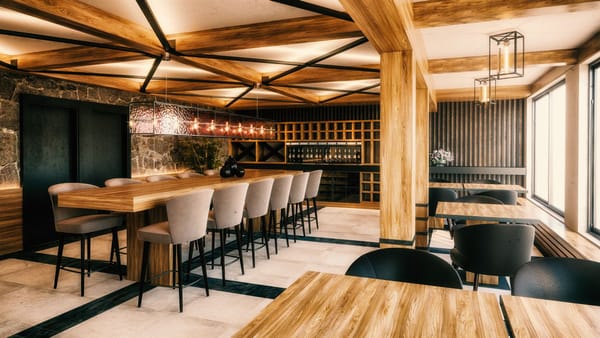
Just fifteen kilometres from Kragujevac, on a plateau above the village of Žirovnica, lies one of those places that help explain why Šumadija has increasingly come to be recognised as one of Serbia’s most promising wine regions. Stari Hrast Winery is neither a large industrial producer nor does it aspire to become one. Its strength lies precisely in the opposite approach: a family estate, its own vineyards and orchards, clearly defined provenance and a close connection between the wine and the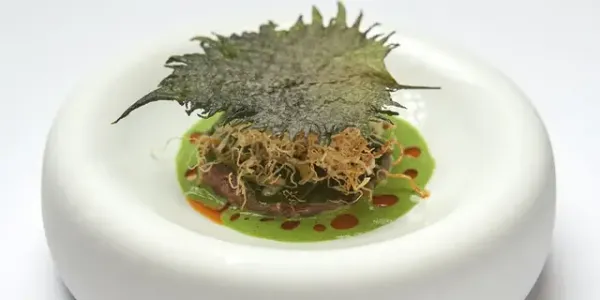
Why Are We Still Ashamed of Our Culinary Heritage?
Šumadija has the products, the tradition and the culture of hospitality, but it still lacks a clear gastronomic direction capable of transforming its local cuisine into a serious tourism product. Šumadija does not have a problem with its culinary heritage. It has a problem with the way it relates to that heritage. This is perhaps the simplest way to describe the position in which one of Serbia’s richest gastronomic regions finds itself today. We have the products, the traditions, the climate an
Stara Srbija Tavern – More Than a Century of Kragujevac’s Kafana Tradition
In the very heart of Kragujevac, on Karađorđeva Street, stands a place that is far more than simply a restaurant. Stara Srbija belongs to that increasingly rare tradition of Serbian kafanas – places where history is not preserved only in old photographs and stories on the walls, but is still felt in conversations around the table, in the aroma of traditional food and in an atmosphere that recalls a time when the kafana was one of the most important institutions of urban life. The roots of Stara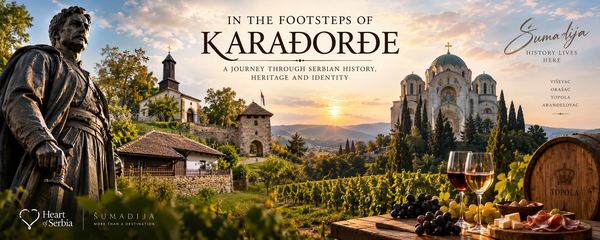
In the Footsteps of Karađorđe – A Journey Through Serbian History, Heritage and Identity
Set out through the heart of Šumadija on a journey connecting some of the most important chapters in Serbian history – from the First Serbian Uprising to the rise of modern Serbia under the Karađorđević dynasty. The thematic route “In the Footsteps of Karađorđe” connects Viševac, Orašac, Topola and Aranđelovac, creating a journey through the places where the foundations of modern Serbian statehood were laid. From Karađorđe’s birthplace in Viševac, through revolutionary Orašac, where the uprisin