
Orašac – The Birthplace of Modern Serbia
On this page
The key event that defined Orašac — and left a lasting mark on Serbian history as a whole — took place on 15 February 1804, on the religious holiday of Sretenje. In a natural amphitheatre known as Marićevića Jaruga, Serbian knezes and other prominent figures of the time gathered to make the decision to launch an uprising against the Ottoman Empire.
Đorđe Petrović Karađorđe — a charismatic military leader and symbol of resistance — was chosen to lead the uprising, marking the beginning of the First Serbian Uprising.
This was far more than a local rebellion. It marked the beginning of the long process of liberation and the restoration of Serbian statehood. For this reason, Orašac is rightly regarded as the cradle of modern Serbia.
Today, the area of Marićevića Jaruga has been developed into a memorial complex where visitors can experience the atmosphere of the historic moment that changed the course of a nation.
Memorial Complex and Landmarks
Orašac offers a number of carefully preserved cultural and historical sites:
Marićevića Jaruga Memorial Complex
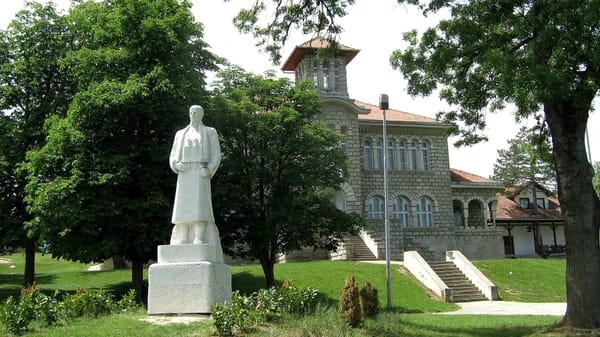
The central gathering place of the 1804 uprising has been transformed into a landscaped memorial park with a monument to Karađorđe, walking paths and informative displays.
It is an essential stop for visitors who want to understand the historical importance of Orašac and its role in the creation of modern Serbia.
Church of the Ascension of the Lord in Orašac
Built in memory of the insurgents, the church serves as the spiritual centre of the village.
Its architecture and peaceful surroundings create a distinctive atmosphere, offering visitors a place for both reflection and quiet appreciation.
Museum of the First Serbian Uprising
Located nearby, the museum houses a valuable collection of weapons, documents, personal belongings and other exhibits connected with the uprising.
Its displays help bring the events of 1804 closer to modern visitors and offer a deeper understanding of the people and circumstances that shaped this crucial period of Serbian history.
The Nature and Landscape of Šumadija
Beyond its historical importance, Orašac also captivates visitors with the landscape that surrounds it.
In this part of Šumadija, the countryside has a particular sense of harmony. Gentle green hills alternate with broad meadows, while orchards of plums, apples and pears stretch across the landscape — all characteristic of the region.
Vineyards covering the sunlit slopes testify to a long tradition of winemaking and to a way of life that has always been closely connected with the land.
The changing seasons add another dimension to the beauty of the area. Spring brings freshness and blossom, summer fills the countryside with colour and life, while autumn transforms it into a warm, almost nostalgic landscape of golden tones.
Throughout it all, Orašac retains something increasingly rare today: peace, silence and a genuine sense of open space.
It is this harmony between nature and history that makes the village ideal both for a short escape and for discovering a more authentic side of Serbia.
Tradition, Customs and the Local Experience
In Orašac and the surrounding area, tradition is not merely part of the cultural heritage — it remains a living part of everyday life.
Hospitality, one of the most recognisable qualities of Šumadija, is deeply rooted in the local way of life. Visitors are not treated simply as tourists, but as guests, welcomed with sincerity and warmth.
Traditional cuisine plays an important role in this experience. Dishes prepared according to local recipes, often using seasonal and locally sourced ingredients, preserve the flavours of earlier generations while reflecting the kind of quality and authenticity that is increasingly valued today.
Local festivals and gatherings held throughout the year also help preserve the identity of the community and keep important historical and cultural memories alive.
The most significant occasion is Sretenje, celebrated on 15 February, when Orašac once again becomes a gathering place for people from across Serbia.
Through official ceremonies, cultural programmes and commemorative events, the atmosphere recalls the moment when decisions of profound importance for the Serbian people were made here more than two centuries ago.
Why Visit Orašac?
Orašac does not attract visitors with extravagant attractions or modern spectacle.
Its strength lies in something much more enduring: authenticity and a deep sense of place.
Here, history is not something observed from a distance. It can be experienced in the very landscape where it actually happened.
The surrounding countryside provides peace and balance, while local traditions remain present in everyday life.
It is precisely this combination that makes Orašac special.
It is not simply a destination to visit, but a place that invites you to slow down, understand the past and experience Serbia in one of its most authentic forms.
Autor
On this page
What's Next?

Lapovo – A Place Where Trains Set the Rhythm
In the heart of Šumadija, between Kragujevac, Jagodina and Velika Plana, lies Lapovo — a small town with a big story. At first glance, it seems quiet and unassuming, yet its history connects it with some of the most important currents in the development of Serbia — and even Europe. Lapovo is one of those towns whose significance cannot be measured by population alone, but by the story it carries. Set in the plains of Šumadija, near the Velika Morava River, it was for centuries a place people p
Grivac – A Prehistoric Town Beneath the Fields of Šumadija
At first glance, Grivac appears to be a peaceful Šumadija village, surrounded by gentle hills, fields and the quiet rhythm of everyday rural life. Yet beneath this seemingly ordinary landscape lies one of the most significant archaeological discoveries in this part of Europe — a Neolithic settlement that is changing the way we understand prehistory. At the Grivac archaeological site, researchers have uncovered the remains of a settlement covering around 40 hectares. This was not simply a collec
Kragujevac – Serbia’s Hidden Capital
Šumadija lies at the very heart of Serbia, and Kragujevac is the heart of Šumadija. It is no surprise, then, that many say this city, located almost at the geographical centre of the country, captures the essence of the Serbian spirit better than anywhere else. Set on the banks of the Lepenica River, Kragujevac rests in a valley surrounded by the beautiful landscapes of Šumadija — the rolling slopes of Mount Rudnik, Crni Vrh and the Gledić Mountains. The City Kragujevac, whose name is believ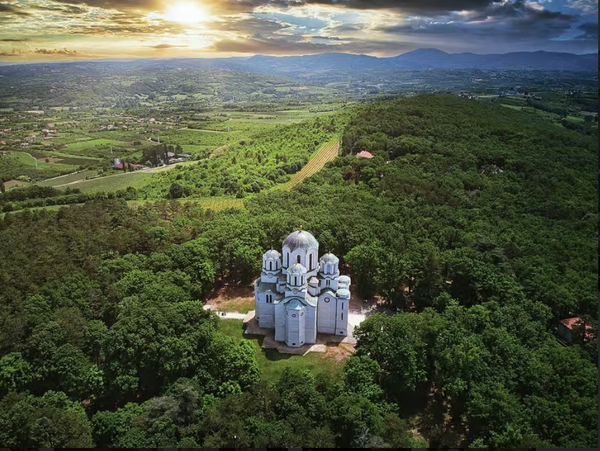
Topola – a place where history breathes among the vineyards
Topola is one of those places in Serbia that isn’t just visited with the eyes, but experienced through layers of history, landscapes, and people. Nestled in the heart of Šumadija, among gentle hills and vineyards, this small town carries a strong identity—a blend of revolutionary past, royal tradition, and contemporary wine culture. At first glance calm, almost quiet, Topola holds within it one of the most important stories of Serbian history. A history that shaped a nation Topola is insepar
Stari Hrast Winery – Wine with a Sense of Place in Šumadija
Just fifteen kilometres from Kragujevac, on a plateau above the village of Žirovnica, lies one of those places that help explain why Šumadija has increasingly come to be recognised as one of Serbia’s most promising wine regions. Stari Hrast Winery is neither a large industrial producer nor does it aspire to become one. Its strength lies precisely in the opposite approach: a family estate, its own vineyards and orchards, clearly defined provenance and a close connection between the wine and the
Why Are We Still Ashamed of Our Culinary Heritage?
Šumadija has the products, the tradition and the culture of hospitality, but it still lacks a clear gastronomic direction capable of transforming its local cuisine into a serious tourism product. Šumadija does not have a problem with its culinary heritage. It has a problem with the way it relates to that heritage. This is perhaps the simplest way to describe the position in which one of Serbia’s richest gastronomic regions finds itself today. We have the products, the traditions, the climate an
Stara Srbija Tavern – More Than a Century of Kragujevac’s Kafana Tradition
In the very heart of Kragujevac, on Karađorđeva Street, stands a place that is far more than simply a restaurant. Stara Srbija belongs to that increasingly rare tradition of Serbian kafanas – places where history is not preserved only in old photographs and stories on the walls, but is still felt in conversations around the table, in the aroma of traditional food and in an atmosphere that recalls a time when the kafana was one of the most important institutions of urban life. The roots of Stara
In the Footsteps of Karađorđe – A Journey Through Serbian History, Heritage and Identity
Set out through the heart of Šumadija on a journey connecting some of the most important chapters in Serbian history – from the First Serbian Uprising to the rise of modern Serbia under the Karađorđević dynasty. The thematic route “In the Footsteps of Karađorđe” connects Viševac, Orašac, Topola and Aranđelovac, creating a journey through the places where the foundations of modern Serbian statehood were laid. From Karađorđe’s birthplace in Viševac, through revolutionary Orašac, where the uprisin